newdemo.thefortuneleader.com

Author: The Fortune Leaders

  • Discovering Successful Online Business Ideas: Where to Look and How to Start

    Discovering Successful Online Business Ideas: Where to Look and How to Start

    Introduction:

    In today’s digital age, online business opens boundless opportunities for entrepreneurs to transform ideas into thriving ventures. With the increasing popularity of e-commerce, remote work, and technological advancements, starting an online business has become more accessible than ever before. However, finding the right business idea that not only aligns with your passion but also has the potential for success can be challenging. In this blog, we will explore where to look for online business ideas that work and how to embark on your entrepreneurial journey.

    Identify Your Interests and Skills:
    The first step in discovering a viable online business idea is to introspect and identify your interests, passions, and skills. During your leisure hours, what activities do you enjoy the most? What are you knowledgeable about? Reflect on your hobbies, areas of expertise, and the things you could talk about for hours on end. By aligning your business with your passions and skills, you are more likely to stay motivated and committed to its growth.

    Research Market Trends:
    Keeping a pulse on current market trends is crucial when seeking a successful online business idea. Research popular industries and niche markets that are experiencing growth and have high demand. Look for gaps in the market that you could fill with a unique product or service. Online tools, such as Google Trends, can help you understand what people are searching for and what topics are gaining traction.

    Observe Successful Entrepreneurs:
    Learning from successful entrepreneurs who have already made their mark in the online business world can be incredibly insightful. Follow industry leaders, listen to their podcasts, read their blogs, and study their journeys. Understanding how they identified their business ideas, overcame challenges, and achieved success can provide valuable lessons and inspiration.

    Leverage Social Media and Online Communities:
    Social media platforms and online communities are treasure troves of information and inspiration. Join relevant groups, forums, and subreddits related to your areas of interest. Engage in conversations, ask questions, and observe the problems people are discussing. This will help you gain deeper insights into the pain points of potential customers, which could spark innovative business ideas.

    Solve Problems:
    One of the most successful approaches to generating online business ideas is to focus on solving problems. Think about common challenges people face and consider how you could provide a solution. Whether it’s creating a time-saving app, offering personalized services, or providing unique products, addressing specific pain points can set your business apart.

    Evaluate the Competition:
    While competition can be intimidating, it also signifies a healthy market. Analyze your potential competitors to understand their strengths, weaknesses, and areas where you could differentiate yourself. Identifying gaps in their offerings can lead to new business ideas or help you refine existing ones.

    Conclusion:

    In the vast realm of online business, discovering a successful idea requires a blend of self-reflection, market research, and innovation. By combining your passions and skills with market demand and problem-solving, you can carve out a unique space for your online venture. Remember that patience and persistence are essential traits for any entrepreneur, as success may not come overnight. Stay committed to your vision, and with dedication, hard work, and adaptability, you can turn your online business idea into a thriving reality. So, take the first step and embark on your entrepreneurial journey today!

  • Jennifer Lopez Kouchis: The Trailblazing Woman Leader, Successfully Leading at One of the Largest Credit Unions in the United States, VyStar Credit Union

    Jennifer Lopez Kouchis: The Trailblazing Woman Leader, Successfully Leading at One of the Largest Credit Unions in the United States, VyStar Credit Union

    Leadership is not about titles, roles, or guidelines. It is about the impact of one life on another. Jennifer Lopez Kouchis, the Senior Vice President of Real Estate Lending at VyStar Credit Union, lives by this philosophy and leads by it. She adheres to the principles of servant leadership and is committed to the credit union movement, with a particular emphasis on developing innovative solutions. She holds over 10 years of experience in the credit union sector and 22 years of experience in financial services. During that time, she has learned the importance of setting an example for others to follow and supporting the upcoming generation of business leaders. Because of her excellence and leadership qualities, Jennifer Lopez Kouchis earned the “40 Under 40 ” honor in 2021 by the Jacksonville Business Journal and was recently named one of the “Most Powerful Women of Mortgage Banking”.

    A Leader with Proven Experience 

    In the key position of Senior Vice President, Jennifer Lopez Kouchis is responsible for managing all aspects of mortgage lending at VyStar Credit Union. VyStar was established in 1952 at Naval Air Station Jacksonville to serve the financial needs of military personnel, civil service workers, and their families. Today, VyStar serves more than 875,000 members throughout Central and North Florida and Georgia. VyStar provides it’s members with the greatest features of credit unions—individual attention, affordable rates, and superb products—with a dedication to enhancing the communities in which they serve. The commitment of employees like

    Jennifer Lopez Kouchis makes that possible.

    Jennifer is responsible for managing all aspects of mortgage lending at VyStar, including sales, operations, credit, risk, technology, secondary marketing, quality assurance, mortgage servicing, loss mitigation, and VyStar Title Agency. She is charged with implementing innovative technologies, process improvements, and mortgage products and programs that align with the credit union’s strategic vision.

    In academics, Jennifer attended the Columbus College of Art & Design in 2002 and later completed her Executive Education Program at the School of Management, UT Austin, McCombs School of Business through a Top Talent Program in 2017. She received the Mortgage Bankers Association’s Certified Mortgage Banker (CMB®)  accreditation in September 2021. Prior to her role at VyStar, she led at BBVA in the USA as a Senior Vice President. She was designated as a sales manager at NVR Mortgage and a regional manager at Navy Federal Credit Union.

    “Over my career, I have experienced highs and lows, but what has shaped me most is my passion and drive and not allowing those lows to define me. I have worked in a variety of roles within the mortgage industry and have made it a priority to keep learning more, working harder, and dedicating myself to mastering the trade I adore. The magnificent woman affirmed, “I too have had the privilege of working alongside some wonderful leaders who taught and encouraged me throughout the years.”

    Through these experiences, Jennifer has developed into an authentic, passionate leader who is dedicated to upending the status quo, and it has motivated her to mentor the next generation of business leaders.

    VyStar’s Unique Initiatives at a Glance

    Jennifer and her teams have made it a priority to develop distinctive products and services that meet members where they are and assist them in achieving their financial goals  to best meet the needs of current and potential members and to contribute to the strengthening of the communities that VyStar serves. Just a few of those initiatives include:

    • Military Heroes Mortgage Program for those on active duty, veterans, and surviving spouses
    • The Everyday Heroes Mortgage Program is open to more than 200 professionals and gives back to those who give to their community every day.
    • With Jennifer’s leadership, VyStar earned its Community Development Financial Institution (CDFI) Certification, which strengthens VyStar’s ability to serve low-income individuals, minority business owners, and many others in distressed communities, particularly those with low to moderate incomes.
    • Expanding homeownership opportunities through partnerships with non-profits like Habitat for Humanity (HabiJax) to offer affordable mortgage loans.
    • VyStar was approved to participate in the Department of Treasury’s Homeowner Assistance Fund to prevent mortgage delinquencies and defaults, foreclosures, loss of utilities or home energy services, and displacement of homeowners.
    • Continued development of a full Spanish-speaking mortgage process, from   origination through processing and closing.

    What Makes VyStar Credit Stand Out?

    VyStar members have access to great rates, low or no fees, early direct deposit, rewards on credit cards, member-centric service and more. By offering cutting-edge solutions, products, and services, VyStar places a high priority on meeting members where they are in their financial journey. As SVP of Real Estate Lending, Jennifer places an emphasis on finding new methods to assist underserved members, particularly those with low to moderate incomes. VyStar is happy to fulfil its purpose to Do Good. VyStar donates millions of dollars annually to hundreds of nonprofit organizations that every day improve the communities the credit union calls home.

    VyStar’s Healthy Work Environment

    As a leader, Jennifer feels it is necessary that her team be a direct reflection of the communities that VyStar serves. Its diversity promotes the development of unique and inventive strategies. Jennifer takes pride in the fact that, via deliberate hiring and internal promotion initiatives, the diversity of her leadership has increased by 23%, and women now make up 58% of the entire leadership within VyStar’s Real Estate Lending division. Jennifer holds open forums dubbed “Catch-up with Kouchis” to encourage meaningful dialogues, talk about new ideas, and debate methods to evolve through varied, open talks to maintain an open line of contact with her team.

    Overcoming the Major Industry Hiccups

    The whole credit union industry is struggling with liquidity. Jennifer is already working to address this issue through her recently established secondary marketing division, where her team is able to sell mortgages and generate additional liquidity for the credit union with noninterest income. Furthermore, she and her team spearheaded VyStar’s efforts to have the service portfolio examined for reevaluation, which resulted in a substantial increase in the valuation of mortgage servicing rights (MSRs) income. The fluctuating interest rate environment is one issue that all mortgage lenders must deal with. Prior to the climate of rising interest rates, Jennifer established a purchase-first origination strategy, which led to continuous growth in the mortgage portfolio in spite of a significant decline in the market as a whole.

    A Bright Future Ahead

    Jennifer is committed to the “people helping people” credo of the credit union sector. Her career objectives include advancing to the position of Chief Lending Officer and ultimately CEO to advance the credit union movement. In addition, Jennifer takes pride in her involvement in the community, which she intends to keep up for the next five years. She currently serves on the following boards:

    • TransUnion’s Mortgage Advisory Board
    • Habitat for Humanity Jacksonville (HabiJax)
    • Cecil Field National POW/MIA Memorial & Museum
    • Rethreaded

    Jennifer’s Advice: Be Your Authentic Self  

    For our work specifically, I adore the idea that “No means Yes.” This revolutionized my life when I started working in the mortgage sector, especially when I was a mortgage loan officer trying to earn agents’ business by making presentations to them. I tried to find methods to turn the numerous “no’s” into “yes’s” rather than dwelling on them. I’ve come to understand that getting people to say “yes” requires you to gain their trust. I was ultimately successful because of my perseverance, desire, and a special method for seeing gaps that needed to be filled. When you are sincere, thoughtful, motivated, and purposeful, you can use these qualities in any situation and in any industry. What value do you add? What contributions do you make? What makes you special? It’s crucial that you learn to feel at ease presenting yourself, so you need to figure out the answers to those questions. In the end, a company, item, or group may bring a customer to the table, but they really want to do business with you. Also, the idea of failing quickly and moving forward is not new. Resistance to adversity is essential since challenges and objections are inevitable. Last and, in my opinion, most vital, is authenticity. Authentic leaders encourage openness, collaboration, and equity among their teams, which fosters trust and results in improved team performance. Remember, don’t change for anyone. Your uniqueness could be what others value most about you!

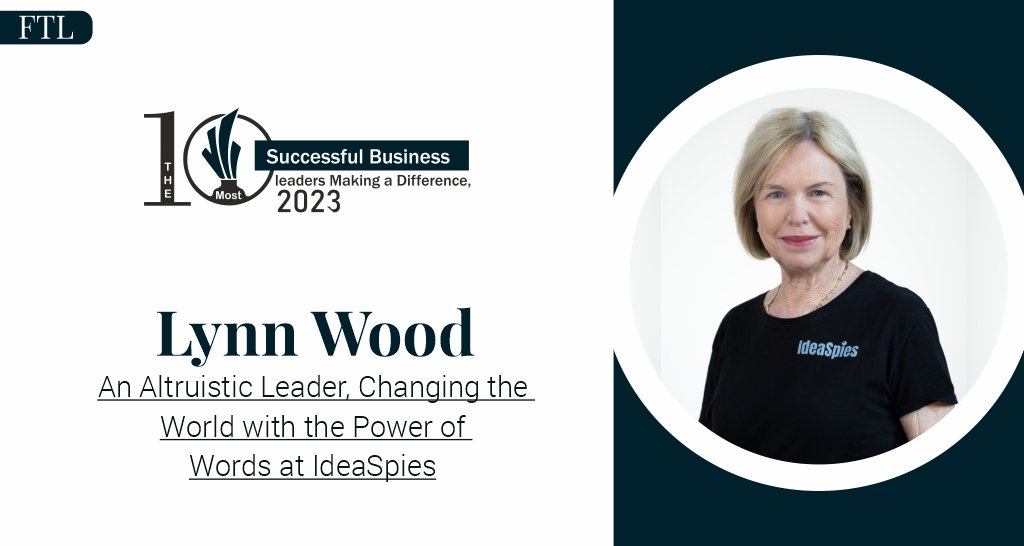
  • Lynn Wood: An Altruistic Leader, Changing the World with the Power of Words at IdeaSpies

    Lynn Wood: An Altruistic Leader, Changing the World with the Power of Words at IdeaSpies

    With women driving success stories across every field, the world has seen a remarkable shift in the leadership pattern since the turn of the millennium. Many current business leaders are women, who have forged their own paths to success and serve as role models for many others.

    One such inspirational woman  is Lynn Wood, the leading lady and Founder of IdeaSpies.

    IdeaSpies: An Innovative Platform

    IdeaSpies is an open innovation platform for creative ideas, new  discoveries, and original  thinkers  that breathes creativity and innovation. Their stories, which are simply written pieces of 100 words or fewer, are meant to broaden readers’ minds and stimulate their imaginations. They disseminate concepts that have the potential to improve lives. IdeaSpies came into existence in the year 2016 with a mission  to accelerate the spread of ideas with the potential to change our world for the better. When you think about it, every innovation is based on an idea.

    Sailing a Glorious Journey: Setting the Sails

    Lynn is a creative business leader who sets new standards in the media industry. She is a harbinger of change. Early in her career, she developed an interest in innovation. She was a member of the American Express Card launch team for Australia, New Zealand, and later, North East Asia. She was also a member of the groups that founded the first wholesale property syndicate,  and the first international property fund in Australia. Lynn has held the position of chair on a number of boards. She was among the first three women in Australia to hold a board position with a publicly traded organisation  and one of the pioneers of a  portfolio career.

    Boards she has served on include the IFRS Foundation, Financial Reporting Council, Foreign Investment Review Board, Noni B, HSBC Bank Australia, Macquarie Goodman Group, Schroders Australia, MS Australia, Save the Children Australia, and Women’s College at the University of Sydney.

     She has also founded, managed, and sold two SME firms in addition to chairing audit committees and serving on compliance committees. Currently she is an Area Councillor for The Royal Society for the Encouragement of Arts, Manufactures, and Commerce (RSA).

    The Inspiration behind the Initiation of IdeaSpies from Lynn’s Mouth

    I was on a ferry to Vancouver Island with a friend, Sabra Brock, and a guide said “Promote what you love, not bash what you hate”. I was so tired of negative news that I thought there should be a platform showcasing the positive and clever ideas happening around the world, explained simply. I had been travelling a lot for work and saw many ideas that are solutions to many current-day problems. Given my diverse background, I thought I had the skills to develop a platform featuring these ideas. Sabra agreed, and we started collecting ideas to pilot the concept on Facebook.

    The Target clientele

    People can search for ideas on the various topics the team covers for free using IdeaSpies. Anyone with a passion for invention can gain. Students working on a project, business people looking for new ideas, or members of organisations looking for ways to expand their operations can all be among them.

    IdeaSpies’ Initial Challenges: Overcoming Hurdles Like a Pro

    There were three major challenges:

    1. Selecting a developer After piloting the concept on Facebook, Lynn and Sabra decided that WordPress would be the best website builder to use, and Lynn  took a course in it to get it going. Very quickly, they recognised that they needed a professional developer. They found one through an online search platform, but it was the wrong person, so had to start again. Sabra, who was the co-founder at the time, suggested one of the IT graduates of the university at which she worked. He and his team in Sri Lanka have had the skills to continue developing IdeaSpies.
    2. Gathering ideas to feature. Initially, the ideas came only from Lynn and Sabra. To grow IdeaSpies, however, they needed many more ideas. At that stage, Sabra decided to continue her full-time role at a university, while Lynn decided to scale down her other paid roles and focus on IdeaSpies. It was suggested that Lynn invite selected people to become voluntary editors of the topics covered. They now have 17 editors, including Lynn, sharing nearly 7,000 ideas explained simply over 19 topics ranging from agriculture to wellness. Sabra is on the IdeaSpies Advisory Board.
    3.  Scaling IdeaSpies. The concept is well-liked by those who are aware of IdeaSpies and are enthusiastic about innovation, and the team has received encouragement to scale it. A few years ago, over 3,000 idea posts  were moved from WordPress to a new framework. More recently IdeaSpies has been rebranded to give it a more professional  appearance on the recommendation of the Advisory Board. 

    The Unique Leadership Approach

    Lynn Wood’s approach is to provide positive guidance so people who support IdeaSpies can be creative and experiment. IdeaSpies Editors  don’t work for money . They are enthusiastic about sharing  ideas that help people, just like she is. 

    Insights on the Gender Pay Gap

    Lynn has had experience as a coach and as a mentor urging women  to have more faith in their skills and capacities. At IdeaSpies, there is no gender pay disparity. Except for the Head of IT , no one is paid anything.

    To be remembered for sharing ‘ Ideas that do Good’

    Lynn aspires to be known for sharing ideas that do good. She has always been fascinated by ideas  that can make people’s lives better. When people discuss problems , she starts thinking about ideas as solutions.

    The Road Ahead: Professional and Professional Goals

    Lynn’s vision  is for IdeaSpies to be the pre-eminent source of innovative ideas for Australians and globally. 

    From a personal point of view,  Lynn encourages creativity, particularly  in the the young. One of the most watched TedTalks of all time asks “Do schools kill creativity?”. She encouraged creativity in her children and is encouraging children more broadly through a new initiative in schools called UpRising.

    Lynn wraps up by saying, “When we look around us, we see that there are many problems  in the world, but there are also many ideas as solutions . We encourage cheerscrolling-  “Instead of scrolling through your news and social media clicking on feeds that upset you or you get mad about….you instead spend your time looking through content on sites that provide positive content that makes you feel cheerful.”- like IdeaSpies. Please join us  https://ideaspies.com/register

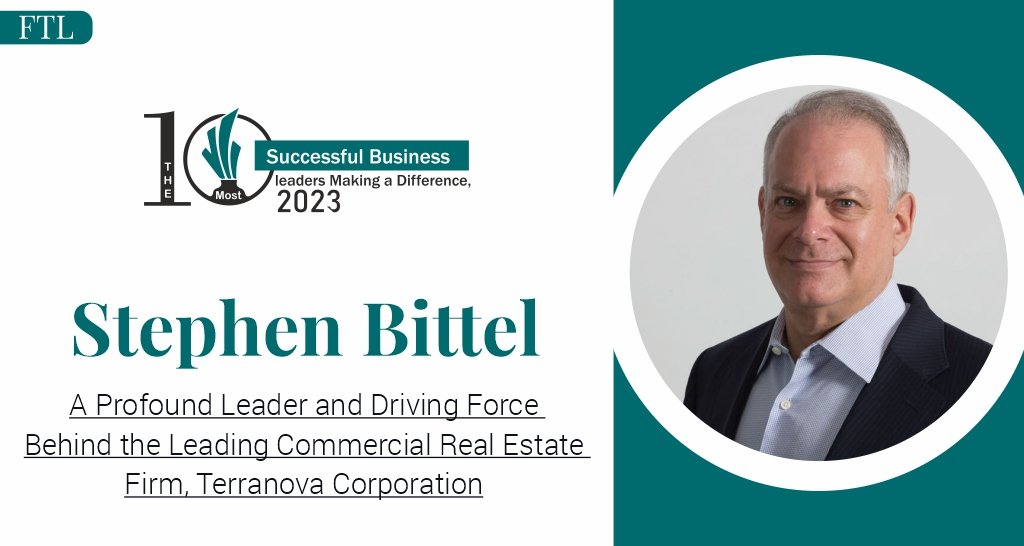
  • Stephen Bittel: A Profound Leader and Driving Force Behind the Leading Commercial Real Estate Firm, Terranova Corporation

    Stephen Bittel: A Profound Leader and Driving Force Behind the Leading Commercial Real Estate Firm, Terranova Corporation

    The corporate landscape of the twenty-first century saw significant upheaval. Not to mention that these changes have severely jolted the investment industry, resulting in a number of revolutionary changes. These include the adoption of formal procedures and strict regulatory guidelines, which subsequently raised investor expectations. A strategic role for investor relations has arisen against this background that goes beyond simply facilitating general investor contact.

    Terranova Corporation has an expert team equipped with strong professional competencies in this domain and is distinguished as a national leader making a powerful impact on the commercial real estate industry under the dynamic leadership of Stephen Bittel, Founder, and Chairman.

    When Stephen Bittel was in his second year of law school, almost forty years ago, he laid the foundation of the Terranova Corporation. Bittel had grown up assuming he would follow in the footsteps of his father and grandfather, who were both lawyers, but after graduating and passing the bar test, Mr. Stephen never went on to practice law. He has led Terranova Corporation through numerous economic cycles, market upheavals, and technology disruptions—you name it, he has seen it—and he is still its chairman today. Few people can say they have been in the same position for nearly fifty years, but the world of alternative investing keeps presenting him with fresh obstacles to overcome, which inspires him and drives him ahead.

    With more than 40 years of expertise, the visionary leader has served as the sole agent for more than $5 billion in business initiatives and has represented illustrious customers including Morgan Stanley, Bank of America, and New York Life. Bittel, who was born and raised in Miami, received his undergraduate education at Bowdoin College in Brunswick, Maine. Bittel earned a bachelor’s degree in economics from Magna Cumlaude, traveled for a year as a Watson Fellow, and then returned to Miami to start law school at the University of Miami on a scholarship.

    Terranova Corporation: At a Glance

    Terranova, an alternative investment firm with a major focus on real estate prospects in the United States, has established a dominating presence in the market and strong industry relationships that they leverage toward their larger network and platform. The firm, which has seen many changes in the commercial real estate sector over the years, now focuses its efforts on seeing and grabbing opportunities that provide value to stakeholders and improve communities as opposed to restricting itself to a certain niche market. The company has invested in a variety of ventures, including urban retail centers, car washes, gasoline stations, office buildings, industrial assets, and strip malls. They are also open to considering ventures in the technology and healthcare.

    The Inspiration Behind the Incorporation: Directly from Bittle’s Mouth

    I received the Watson Fellowship in my final year of college, which allowed me to spend a year traveling and performing independent research throughout Europe. I conducted research on the reasons for European investment in the United States during my “wanderjahr,” building on a prior study I had prepared on the tax treatment of non-resident investors while I was employed at the Congressional Budget Office in Washington, D.C. I met with investment advisors and bankers frequently as part of the project, and I was pleased with the private banking model there and how it offered extensive personalized care to high-net-worth people. My objective in establishing Terranova—Latin for “new world”—was to duplicate this kind of service for offshore investors focused on the United States.

    Overcoming the Hurdles Along the Way

    Like other entrepreneurs, Stephen Bittel has faced many difficulties. First and foremost, when he first began his business, he had a negative net worth and was significantly undercapitalized. As everyone who works in business is aware, this is not the best place to be when starting out. As they have survived recessions and other economic crises over the years, he had to swiftly learn how to manage his cash flow and balance sheet in order to survive, but it has turned out to be one of their greatest advantages. Today, Bittel and his group believe that trying times are the finest opportunities to use their financial sheet.

    The Secret Sauce Behind Stephen Bittel’s Victorious Journey

    On being asked what factors pushed his growth as an inspiring leader, the magnificent man asserted, “Stepping consistently out of your comfort zone is the best way to ensure you are continuously growing and moving forward throughout your life.” When asked what aspects fueled his development as an inspirational leader, Although I was born and raised in Miami, I chose to travel to Brunswick, Maine, to attend Bowdoin College. In and of itself, the transition from a public school system to a private liberal arts college is jarring. Add to that the fact that I was living more than 1500 miles away from where I had spent my entire childhood. It is experiences like that—studying abroad, starting a business—that drive growth in a person and enable them to in turn grow their businesses.”

    The Impact of COVID on Terranova: Opportunities and Challenges

    Initially, the pandemic certainly shook up the commercial real estate industry. Retail establishments undoubtedly suffered during the lockdowns, and the work-from-home culture that emerged created a lot of questions regarding the future needs for office space. However, as things have worked themselves out, the Terranova crew is emerging with a positive outlook. The general tendency appears to be that each business must choose the model that works best for them, and Miami has seen significant expansion that has produced, to put it mildly, some interesting options.

    Terranova’s Key Focus: An Innovative and Inspiring Work Culture

    At Terranova, they are committed to making a significant difference in the community they live in as well as the commercial real estate sector they serve. All of their principles align with this central goal, which serves as their mission. No matter their background, Bittel believes in fostering the growth of our top employees in terms of workplace culture. For instance, our current president, who has been with the company for 26 years, began her career there as an executive assistant.

    Achievements and Accomplishments that Symbolize Terranova’s Success

    Terranova is one of South Florida’s leading commercial real estate firms, with a portfolio that has more than a billion dollars in assets. They are known for being willing to take risks and gain great rewards as a result, as evidenced by their initial investment in Lincoln Road, which they quickly sold for over twice the original investment. It was one of the biggest real estate transactions in Florida’s history at $342 million.

    “2022 saw us capitalize on the population influx as people moved to Miami from across the country. We made several opportunistic investments, as well as selling our own headquarters of several decades”, revealed the inspiring leader. 

    Looking ahead, the firm has a number of balls in the air in terms of investment opportunities and looks forward to settling into our new headquarters. They plan to invest wherever they see the potential to create value.

    Words of Wisdom

    Don’t think you need a lot of money to start making investments in commercial real estate. Good investors are known for their unconventional thinking, so find a way to get the money and keep an eye out for opportunities.

  • Louis Lehot: Taking Companies from Garage to Global

    Louis Lehot: Taking Companies from Garage to Global

    Meet Louis Lehot, a partner with Foley & Lardner LLP, a preeminent law firm that stands at the nexus of innovative technology, smart manufacturing, the energy transition, healthcare and life sciences. Louis is a prominent corporate lawyer based in Silicon Valley, known for his experience in handling high-profile transactions in each of the tech, healthcare and clean energy industries. As a partner in the firm’s Private Equity and Venture Capital, Mergers & Acquisitions and Transactions Practices, and the Technology, Health Care, Life Sciences, and Energy Industry Teams, he advises entrepreneurs and their management teams, investors, and financial advisors at all stages of growth. 

    After beginning my career in New York, I moved to Europe and spent five years advising non-U.S. multinationals on how to access the U.S. capital markets before returning home to Silicon Valley. Passionate about helping businesses and ventures with compelling technologies reach their growth objectives, I specifically enjoy helping companies cross borders, where an appreciation of different cultures and backgrounds is key.” 

    Louis is a full life-cycle innovation lawyer, and prides himself on taking on clients from ideation to formation, to financing, to scaling, to hyper-growth, to liquidity and beyond. Louis calls this a “garage to global” practice, focusing on positioning clients to achieve product-market fit, to hyper-growth, going public, and obtaining optimal liquidity events. He and his team are on the forefront of adopting new technologies to innovate the way they do deals. Louis guides emerging private companies as they secure venture capital financing, prepare for IPO or an M&A transaction, focusing on how to navigate the exit. 

    Clients routinely turn to Louis for his domain experience in public offerings and private placements of equity, equity-linked, and debt securities, mergers, acquisitions, dispositions, spinoffs, strategic investments, and joint ventures, as well as corporate governance and securities law compliance matters. Louis also regularly represents U.S. and non-U.S. registrants before the SEC, FINRA, NYSE, and NASDAQ. His goal is to help the law firm and his clients grow teams of lawyers to accelerate their business at the closest point of contact.

    About Foley and Lardner LLP

    Foley & Lardner LLP is a highly respected law firm that looks beyond the law to focus on its clients’ constantly evolving demands and act as trusted business advisors to deliver creative, practical, and effective solutions. Foley’s 1,200 lawyers across 25 offices worldwide partner on the full range of engagements from corporate counsel to IP work and litigation support, providing clients with a one-team solution to all their needs. 

    Foley & Lardner is well known for its forward-thinking approach and willingness to try new and innovative methods. Innovation is vital to the law firm’s strategic plan and part of its everyday collective mindset. Foley’s proprietary tools, such as Foley Equipped and Foley Collaborate, exemplify this commitment to innovation and are actively utilized in practice.

    Key USPs

    Foley is a premier full-service law firm with a collaborative culture and strong core values. The firm provides services to clients in key sectors that align with its core capabilities. These sectors include energy transition, healthcare, life sciences, innovative technology, and smart manufacturing, which have undergone significant transformations in recent years.  Louis and his team at Foley cross geographic borders with clients and follow the innovation everywhere that it has impact, increasing their efforts to help clients stay ahead of the curve in each of these areas.

    Motivating Creativity and Innovation

    Louis and his team at Foley & Lardner place a strong emphasis on empowering everyone to bring their best selves to work each day. The law firm invests in its people and provides an array of resources to support its attorneys and business professionals. This includes a comprehensive lateral integration program, mentoring programs, and leadership development training. Foley’s commitment to employee well-being is exemplified by its Best Self Program, which recognizes the importance of mental health and burnout prevention. The law firm also has an in-house executive coach who offers career counseling and a peer program to support those struggling with certain life events. 

    Major Challenges

    Louis believes the legal industry’s major challenges range from how to:

    • respond to the rapid adoption of AI
    • lead with technology to more efficiently, accurately and promptly deliver critical legal services
    • manage business across jurisdictions and cultures (some of which are suffering from cold war or active combat), 
    • manage through economic uncertainty
    • remain competitive for talent
    • respond to the changing in-house legal structures and their approaches toward working with outside firms 
    • compete and collaborate with our clients’ other service providers, from accounting firms to consultants to software

    For Louis’s clients, the major challenges ahead can be summarized by how to achieve scalability and hyper-growth in the face of active and cold war (and how to manage a supply chain), how to finance growth in a higher inflation and interest rate environment and selling to customers who are tightening budgets.  Technology innovation should lead the way in addressing these challenges, which will involve organic growth as well as acquisitions.

    Looking at the Future

    In the next five years of his professional life, Louis aims to position himself to assist his clients and teammates in achieving success through innovative strategies. Louis aspires to continue to cross borders with his clients’ businesses and teammates to help them grow from garage to global and genuinely see them and hear the team wherever they are.

    In his personal life, Louis aspires to achieve a healthy physical and mental lifestyle while enjoying his beautiful family and friends as they accomplish their goals. 

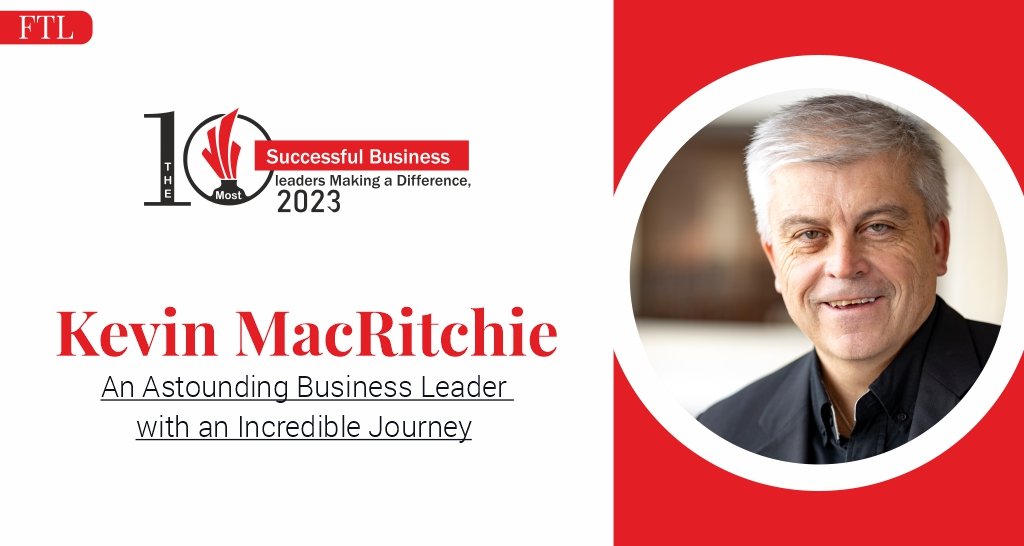
  • Kevin MacRitchie: A Steadfast Leader Spearheading Change

    Kevin MacRitchie: A Steadfast Leader Spearheading Change

    Kevin MacRitchie is a charismatic executive leader with deep knowledge and experience in leading operations and sales. Kevin is a change agent for business growth and turnarounds, talent development, and new market expansion. With his exceptional track record in guiding cross-functional teams, designing cutting-edge business solutions and services, driving greater efficiencies and accountability, Kevin now leads Tactical Rehabilitation, a full-service DME company whose mission is to serve those who serve the nation.

    David Marr, the now Chairman of the Board, founded Tactical Rehabilitation in 2013 to provide the highest quality products and the highest level of qualified service to active-duty service members, veterans, and their families in the initial areas of bio-mechanical, Musculoskeletal, and non-pharmaceutical pain management. This specific mission under the super category of Durable Medical Equipment (DME) has kept the company entirely focused on some of the specific needs to solve more than 68% of the injuries in the U.S. military that prevents men and women in uniform from sustaining a ‘service-ready’ status. 

    The business, which was founded in 2013, has since significantly expanded its product lineup while remaining true to its commitment to serving the requirements of the military.

    Kevin joined Tactical Rehabilitation in 2020 as its Chief Operations Officer and transformed the company to serve its patients better and grow its capabilities through efficient operations, dedication to its patients, creating a consistently positive experience, and developing lasting positive partnerships. Later in 2022, Kevin was appointed as the company’s CEO, where he began revolutionizing the healthcare industry through common purpose, leadership, partnerships, teamwork, and a better experience serving the U.S. military. 

    Kevin is also an avid and very active horseman. He rides his horses as often as possible and uses them to support the local sheriff’s department and for herding buffalo in Michigan and South Dakota. 

    My family and I are all active horsemen and women. If we are not horseback riding or training someone’s horse, which is rare, we go Jeeping. As long as we are outdoors doing either of these, my family and I are pretty happy. We believe everyone must play as hard as they work. It is a necessary balance for peace of mind and for great ideas to come to life,“- he explained.

    About Tactical Rehabilitation

    Tactical Rehabilitation is a full-service Durable Medical Equipment (DME) Provider to the United States Military with a special focus on Bio-Mechanical and Parasomnia support, which makes up more than 68% of the injuries faced by the U.S. army personnel. 

    One of Tactical’s most honored partners is Sole Supports. Developed by Dr. Ed Glaser under the Mass Posture Theory, Sole Supports are entirely personalized for every patient and are weight and foot flexibility calibrated. It is the only orthotic on the market that focuses on ensuring good posture from head to toe and healing instead of slowing the degradation of a patient’s condition.

    Like Sole Supports, Tactical has several other partner product companies focused on healing patients and continuously seeking improvement in their products.  

    Overcoming Challenges

    Unlike its competitors, Tactical Rehabilitation kept its doors open and faced the hard challenges of Covid. At the same time, it also expanded where others could not. It took the pandemic’s challenge head-on and made several hard decisions. 

    Our commitment is to ensure we are available for our patients and here for our employees, even in difficult times. To do so, we must seize the market opportunities when they arise, and internally, rise to the occasion and put the effort in to grow our team and the opportunities for our employees to grow as well,“- Kevin explained. 

    He feels the most fun part about challenges are they provide opportunities to overcome and make a better self, which can be a person, service, product, or company. Kevin and his team at Tactical Rehabilitation love challenges as they always solve them with a better outlook and service offering on the other side of the resolution, ensuring their patients get even better care than before.  

    For me looking back, it has been continuously improving the “Tactical Experience” while building the company’s ability to sustain its own growth. We have improved every in-house system and business tool with no interruption of service to our patients and with no downtime for our employees. This has allowed us to create and develop a more technology-based company that can stay ahead of the expectations of our doctors’ and patients’ needs,“- Kevin stated. 

    Not all Heros Wear Capes

    Being a full-service DME company, Tactical Rehabilitation is entirely focused on the healthcare needs of the military and supporting their “service ready” status. It uses highly trained and certified professionals, many of whom are veterans with an even greater understanding of patients than others. Speaking about the same, Kevin proudly said, “Our goal is to ensure active duty, veterans, and family members all have the best opportunity for the best quality healthcare with the same or better standards than that of the private sector. As far as we know, no other company is fully dedicated to U.S. Military health in the same manner we are. If there is, we would love to meet them and partner with them for the mutual improvement of each of us and the ultimate benefit to our patients.

    David founded Tactical Rehabilitation for the sole purpose of providing the same or better healthcare to U.S. Military service men and women compared to civilian healthcare. Keeping the purpose in mind, Tactical Rehabilitation now partners with military bases and military healthcare providers to offer solutions through its partnerships in the civilian solutions provider network, ensuring those that put their life on the line to protect our freedoms no longer receive lesser care than those who do not serve.  

    Looking at the Future

    Under Kevin’s firm leadership, Tactical Rehabilitation will continue to grow and serve the men and women in uniform until it has easy access to all of them. This will require new models for nearly inaccessible geographies in the U.S. and across the planet, and it is well on its way. Kevin feels this will also need stronger partnerships and an agile yet systematic approach to continued success as the stakes get higher the larger any company gets. 

    This will also require adding new services and solutions that go beyond the initial founding of our company and continuing to expand our solutions based on the priority needs of our patient base,”- he explained.

    Suggestions for Younger Self

    Kevin advises young entrepreneurs to Plan. Set goals. Move the goalpost just before they get there. And when they celebrate passing that goalpost on the way to the next, they must remind themselves the goal is still attainable; it has just moved further down the road.  

    If we sit on our laurels, we will forget to improve, and constant improvement is the only way you create opportunity.“- he advises. “Also, ensure each team member, including yourself, truly knows their value and skill set boundaries. Hire, or partner for the skill sets you don’t have, and don’t fool yourself into thinking you can do it all.

    Company Name; Tactical Rehabilitataion

    Management: Kevin MacRitchie, CEO

    URL: tacticalrehabdme.com

  • The Importance Of Setting Clear Goals And Objectives As A Leader 

    The Importance Of Setting Clear Goals And Objectives As A Leader 

    Being in control is just one aspect of leadership; more importantly, it’s about directing others to achieve their goals as a group. A leader must establish crystal-clear goals and objectives as one of their primary tasks. A group risks quickly losing its concentration, becoming disorganized, and falling short of realizing its full potential if it does not have a specific path to follow. In this content for your blog, we will discuss why it is important for good leadership to have clear goals and objectives, as well as how doing so may generate success.

    1. Alignment and Focus: Having crystal-clear goals and objectives provides the whole team with a single purpose and a sense of direction. It is easier to coordinate everyone’s efforts and foster a feeling of togetherness when everyone is aware of the end goal that they are working towards. The team members can more effectively prioritize their duties and distribute resources. It is easier for the team members to filter out unimportant information and achieve progress when they are all working towards the same goal.

    2. Motivation and Engagement: Giving team members a feeling of purpose and motivating them may be accomplished by setting clear goals and objectives. When people have a specific goal in mind that they are working towards, they are more likely to feel engaged and dedicated to the task that they are doing. Employees are encouraged to go beyond their comfort zones and realize their full potential when they are provided with well-defined objectives that instill a feeling of both urgency and difficulty. As people get closer to reaching the desired results, they can recognize their development and experience an increased feeling of success.

    3. Measuring and Being Accountable: Having crystal-clear goals and objectives provide a baseline against which to evaluate both progress and success. They make it possible for leaders to monitor performance and assess whether or not the team is on the right path to accomplish the intended results. When objectives are defined and quantifiable, it is much simpler to evaluate the performance of both individuals and teams. Accountability is encouraged when clear objectives are established because team members are aware of what is expected of them and can be held accountable for their contributions.

    4. Prioritising activities and Effective Resource Allocation: Leaders who establish clear objectives can better prioritize activities and efficiently deploy resources. They can determine what is most important and direct their efforts towards activities that align with the strategic goals as a result. It is much easier for leaders to make educated choices on resource allocation when they have clear objectives to guide them. This helps to ensure that time, talent, and resources are focused on activities that contribute to the organization’s overall goals. This ensures that no work is wasted while also boosting overall productivity.

    5. adaptation and Agility: While it is necessary to define clear objectives, it is just as crucial to allow for flexibility and adaptation. A corporate environment that is always changing requires its executives to be flexible and willing to adapt their aims and objectives on the fly. However, leaders should also push their teams to embrace Agility and adjust their tactics to new possibilities or difficulties. Clear objectives serve as a guiding framework, but leaders should also urge their teams to embrace Agility. Because of this flexibility, businesses may keep their capacity to adapt to shifting market circumstances and innovate even as those conditions evolve.

    6. Communication and Collaborative: Work Having well-defined goals and objectives may be useful for leaders, allowing them to explain expectations to their team members and providing them with direction. When objectives are clearly articulated and successfully communicated to stakeholders, there is less room for ambiguity and confusion. It makes collaborating easier for team members since they can better grasp how their efforts fit into the wider picture. Having well-defined goals encourages open and honest communication, ensuring that everyone is on the same page and working towards the same goals.

    Conclusion

    In conclusion, one of the most important aspects of good leadership is formulating distinct goals and objectives. It gives the team direction, ensures they are aligned, and motivates them. Having well-defined objectives paves the way for effective measurement and accountability, enabling leaders to monitor progress and assess performance. They assist leaders in properly prioritizing work and allocating resources. Last but not least, having well-defined objectives encourages adaptation and Agility, which in turn enables organizations to traverse shifting environments successfully. Leaders allow their teams to collaborate towards a common vision and drive success by laying out specific goals and objectives for them to achieve.

  • The Power Of Servant Leadership: Putting Others First

    The Power Of Servant Leadership: Putting Others First

    Servant leadership offers a refreshing perspective in a world where leadership often conjures images of authority, dominance, and self-interest. Servant leadership flips the traditional power dynamic by prioritizing the needs of others above personal gain. This philosophy fosters trust, collaboration, and empathy, resulting in empowered teams and sustainable success. We will examine the impact of servant leadership in this blog and how putting others ahead of oneself may change people, businesses, and society as a whole.

    Servant Leadership

    Servant leadership is a leadership ideology that stresses the main objective of leadership as helping others. It involves a mindset shift from traditional hierarchical models, where leaders exercise authority over their subordinates, to one where leaders see themselves as servants first.

    At the core of servant leadership lies the belief that leaders exist to serve the needs of their team members, enabling them to reach their full potential. This leadership style embodies empathy, active listening, selflessness, and a genuine commitment to the growth and well-being of others.

    The Principles of Servant Leadership

    1. Putting Others First: Servant leaders prioritize the needs and interests of their team members, actively seeking opportunities to support and develop them. By selflessly putting others first, these leaders create an environment of trust and collaboration.

    2. Active Listening: Servant leaders excel in active listening, seeking to understand the perspectives, concerns, and ideas of their team members. They create a safe space where individuals feel heard and valued, fostering a culture of open communication and innovation.

    3. Empathy and Compassion: Servant leaders genuinely care about the well-being of their team members. They empathize with their struggles, celebrate their successes, and provide support when needed. This empathetic approach cultivates a sense of belonging and loyalty within the team.

    4. Fostering Growth and Development: Leaders who serve are dedicated to fostering the progress and advancement of their team members. They provide mentorship, guidance, and opportunities for learning, empowering individuals to reach their full potential.

    5. Building Trust and Collaboration: Leaders who serve their team members understand that trust is the fundamental element that forms the basis of a team’s success. By treating others with respect, integrity, and transparency, they build strong relationships based on trust, which fosters collaboration and cooperation.

    The Benefits of Servant Leadership

    1. Enhanced Employee Engagement: When leaders prioritize the needs of their team members, it fosters a sense of ownership and engagement among employees. They feel valued, motivated, and empowered to contribute their best efforts, increasing productivity and job satisfaction.

    2. Improved Team Collaboration: Servant leadership promotes a culture of collaboration and teamwork. By focusing on collective goals rather than personal achievements, leaders inspire their team members to work together, leveraging diverse perspectives and skills to achieve exceptional results.

    3. Increased Innovation and Creativity: Implementing servant leadership can be a highly effective strategy for attracting and retaining high-quality employees. This freedom to innovate leads to a higher level of creativity and problem-solving within the team, driving continuous improvement and adaptability.

    4. Retention of Top Talent: Servant leadership can be highly effective in attracting and retaining skilled and talented individuals. When employees feel supported, valued, and given opportunities to grow professionally and personally, they are more likely to remain with an organization.

    5. Positive Organizational Culture: When servant leadership is embraced at all levels of an organization, it cultivates a positive and inclusive organizational culture. This culture, characterized by trust, respect, and a shared sense of purpose, attracts like-minded individuals and contributes to long-term corporate success.

    Application of Servant Leadership in Various Settings

    1. Business and Corporate World: Servant leadership has gained recognition as an effective leadership style in the business world. Organizations that prioritize servant leadership principles experience higher employee satisfaction, improved customer service, and increased profitability.

    2. Education: Servant leadership empowers teachers to create a nurturing and inspiring learning environment. By placing the needs of students first, educators can positively impact student engagement, academic achievement, and overall well-being.

    3. Nonprofit and Social Organizations: Servant leadership aligns naturally with the goals and missions of nonprofit and social organizations. Leaders prioritizing serving the community and empowering their teams inspire collective action, significantly impacting social issues.

    4. Government and Public Service: In the realm of government and public service, servant leadership can transform the way leaders interact with citizens. By genuinely listening to the needs of the people and working collaboratively to address those needs, public servants can build trust and foster a sense of community.

    Conclusion

    The power of servant leadership lies in its ability to transform individuals, organizations, and society as a whole. By putting others first, leaders inspire trust, foster collaboration, and create environments that promote growth and development. The benefits of servant leadership extend beyond the workplace, shaping positive cultures and impacting communities. Embracing servant leadership can catalyze meaningful change and sustainable success as we strive for a more inclusive and compassionate world.

  • The Art Of Effective Communication In Business: Strategies For Clear And Impactful Messaging

    The Art Of Effective Communication In Business: Strategies For Clear And Impactful Messaging

    Communication is the driving force behind any successful business. Clear and compelling language may make all the difference, whether communicating your vision to your team, negotiating with clients, or selling your goods and services to prospective consumers. In this article, we will investigate the art of successful communication in business and talk about tactics that may assist you in improving your communication abilities and accomplishing your objectives.

    1. Be Aware of Your Target Market:

    Understanding one’s audience is one of the most important yet often overlooked parts of successful communications. Various stakeholders each have unique sets of demands, expectations, and degrees of comprehension. Please make the necessary adjustments to your message so that it connects with the people you’re trying to reach. Please consider their prior experience, level of expertise, and preferred modes of communication to convey your information in a relevant and interesting manner.

    2. Speak in a way that is both clear and concise:

    When it comes to business communication, keeping things simple is essential. Avoid using jargon, acronyms, and terminology that is too sophisticated to avoid confusing your readers. Choose clear and concise language when you want to deliver your point successfully. Remember that the objective is to be understood, not to impress with an optional intricacy.

    3. Pay Attention to the Most Important Message:

    Determine the most important point you want to get across before you start discussing. Always make sure that it is front and center in your conversation, and center your message around it. You can guarantee that your audience will understand the fundamental concept you are attempting to convey if you zero down on the most important information to them.

    4. Participative hearing :

    Listening is an essential component of effective communication, alongside the more obvious act of speaking. Active listening involves paying attention to what other people are saying, asking questions to clarify, and demonstrating a real interest in what is being discussed. Not only does this assist you to comprehend their point of view, but it also helps you create rapport and trust with them.

    5. Determine the Appropriate Medium:

    The many modes of communication each have their advantages and disadvantages. Select the mode of communication most suited to conveying your message, taking into account both the nature of the message and the audience’s preferences. Choosing the appropriate channel for conveying your message significantly increases its impact and usefulness. This is true whether you want to communicate in person, through email, over the phone, or via video conferencing.

    6. Communicating Without Speaking:

    Keep in mind that communication is not restricted just to the use of words. Your message may be dramatically altered by how it is perceived due to nonverbal clues such as body language, facial expressions, and tone of voice. Please pay attention to your nonverbal communication and ensure that it expresses confidence and honesty by ensuring it fits the message you aim to send.

    7. Use Visual Aids:

    Your message may be clearer and more affect the audience if you use visual aids like graphs, charts, and infographics. They can make complicated material easier to understand and remember and attract the audience’s Attention. Make smart use of images to complement and reinforce the message that you are doing verbally.

    8. Seek Feedback:

    Because communication is a process that goes in both directions, it is important to seek input from your audience actively. Foster open communication, inquire about people’s points of view, and remain attentive to critical Feedback. Not only does receiving Feedback allow you to assess how well you communicate with others, but it also shows that you appreciate the perspectives those around you offer.

    9. Put Empathy into Practise:

    Put yourself in the position of your audience so that you can communicate more effectively. Think about their point of view, their requirements, and their worries. Because you empathize with them, you can design your message in a manner that speaks to them and addresses the particular interests that they have. It helps people feel connected and understand one another better.

    10. Continuous Improvement:

    Communicating effectively can be honed and improved upon through practice and experience. To improve your communication skills, look into participating in professional development options such as seminars or classes. Make it a priority to continually develop your ability to explain your message in a clear and convincing way.

    Conclusion

    If you want to succeed in business, you need to become an expert in effective communication. You can improve your communication skills and achieve clear and impactful messaging by first gaining an understanding of your audience, using clear language, then concentrating on key messages, then actively listening, then selecting the appropriate medium, then utilizing nonverbal cues and visual aids, then seeking Feedback, then practicing empathy, and finally committing to continuous improvement. Effective communication ensures that your words are understood and helps establish strong connections, stimulates cooperation, and assists you in accomplishing your professional goals.

  • The Art of Negotiation: Strategies for Successful Business Deals

    The Art of Negotiation: Strategies for Successful Business Deals

    In business, the ability to negotiate well is very necessary. Your capacity to bargain well is a crucial factor in determining whether your company will succeed. This is true whether you are concluding a contract with a customer, negotiating a partnership agreement, or discussing terms with your vendors. The skills of preparation, communication, and strategic thinking are all necessary components for mastering the art of negotiation. In this blog, we will discuss many essential methods that will assist you in becoming a great negotiator and achieving favorable results in the commercial negotiations you enter into.

    1. Carry out Extensive Preparations:

    Preparing oneself intellectually before engaging in any negotiation is essential. Do some research on the other person involved and have a good understanding of their requirements, goals, and boundaries. Find possible areas of cooperation and areas in which you may have to make some concessions. Prepare responses to any concerns and consider other points of view. During the negotiating process, the better prepared you are, the higher your self-assurance and sense of control will be.

    2. Clarify Your Objectives:

    Ensure that your goals and the results you want from the negotiation are very clear. Determine the areas in which you are prepared to make concessions and those in which you will not budge. If you plan out your objectives in advance, you can use them as a guide when making choices during the negotiation, making it easier for you to keep your attention on the genuinely important things.

    3. Being an Active Listener:

    Successful negotiations depend critically on clear and concise communication. Active listening is paying attention to the verbal and non-verbal clues sent by the person you are conversing with. Understand their point of view, issues, and what drives them. You can earn people’s trust and create an environment more conducive to collaboration if you can show that you understand their requirements.

    4. Develop Solutions That Benefit Both Parties:

    The negotiation process should not be a zero-sum game in which one side triumphs while the other suffers defeat. Make it a goal to devise solutions that benefit all parties involved and result in a win-win situation. Keep an eye out for chances to discover areas of agreement and investigate imaginative solutions that meet the requirements of all parties. Working together to solve an issue may result in better relationships and longer-term success.

    5. Continue to Develop Your Emotional Intelligence:

    Confrontation and heated exchanges are possible outcomes of the negotiation process. Throughout the whole process, it is essential to keep one’s cool, preserve one’s composure, and keep one’s emotional intelligence. It is important to refrain from becoming defensive or taking things personally. Instead, you should concentrate on the problems and work to discover solutions that benefit all parties. You will be able to make more sensible choices if you can keep your emotions in control, and you will also be able to have a healthy working relationship with the other person.

    6. Recognise the Strength in Your Silence:

    The art of maintaining silence may be a very effective technique in negotiating. Utilise silence as a tool for strategic thinking rather than rushing to answer or fill the gaps in the discussion. It can make the other party uncomfortable, which may encourage them to divulge greater information or make additional compromises. It is important to exercise patience and utilize quiet as a tool to obtain power and influence in the negotiation.

    7. Have the Willingness to Step Away:

    One of the most crucial negotiating skills is recognizing when it is appropriate to withdraw from a negotiation. There are occasions when the terms presented to you do not coincide with your goals or the value you bring to the table. You will demonstrate strength and safeguard your interests if you are prepared to back out of a contract if it does not fulfill the conditions you have set for it. This frame of mind also makes the opposing side more inclined to compromise to achieve a good agreement for both parties.

    8. Continue to Communicate and Nurture Relationships:

    After a negotiation has been successfully ended, it is very important to follow up and ensure that all of the conditions agreed upon are put into action. In addition, continuing to build connections with the other side after the negotiation might pave the way for future collaboration and collaboration. Building relationships and participating in networking events provide a more robust corporate environment and improve one’s chances of engaging in fruitful negotiations.

    Conclusion

    Negotiating is a talent that can be acquired and refined throughout one’s career. You may become a competent negotiator and obtain profitable business transactions by properly planning, clarifying your objectives, practicing active listening, developing win-win solutions, retaining emotional intelligence, strategically using silence, being prepared to walk away, and following up. Keep in mind that bargaining is