
newdemo.thefortuneleader.com

Category: NEWS

  • Embedl sets a new standard for on-device LLM inference, releasing the world’s fastest language models for the edge.

    Embedl sets a new standard for on-device LLM inference, releasing the world’s fastest language models for the edge.

    Gothenburg, Sweden — December 8, 2025

    Embedl, a Swedish deep-tech pioneer in AI model optimization, announced today FlashHead, an optimization method that makes the most popular language models, including Llama-3.2 (Meta), Gemma-3 (Google DeepMind), and Qwen-3 (Alibaba), the fastest models for on-device inference.

    The technology, “FlashHead: Efficient Drop-in Replacement for the Classification Head in Language Model Inference,”  reduces latency by up to 43% while preserving full model accuracy.

    “FlashHead eliminates a major AI deployment bottleneck,” says Hans Salomonsson, CEO of Embedl. “ This means world class SLM models now run at lightning speed on everyday devices; fast, compact, and sustainable.”

    A Revolution in Language Model Efficiency

    Today’s classification head predicts the next token by assigning a probability to all possible tokens, but it is resource-intensive. State-of-the-art models include hundreds of thousands of possible tokens in their vocabularies, causing the head to become a severe bottleneck for inference. FlashHead reformulates a language model through the lens of information retrieval, making it faster and less computationally demanding. Notably, FlashHead delivers these efficiency gains while leaving the model’s output virtually unchanged.

    FlashHead achieves this through several innovations, including equal-sized clustering for fast memory access, multi-probe retrieval, probabilistic sampling for increased speed, and selective quantization.

    1. Equal-sized clustering for fast memory access.
    2. Multi-probe retrieval to evaluate multiple token clusters efficiently.
    3. Probabilistic probe sampling for accurate, high-speed decoding.
    4. Selective quantization for robust low-bit computation without accuracy loss.

    These optimizations make the classification head a minor cost, enabling fast inference even on low-power devices.

    Proven Across Model Families

    FlashHead has been tested on several of the world’s most widely used open models:

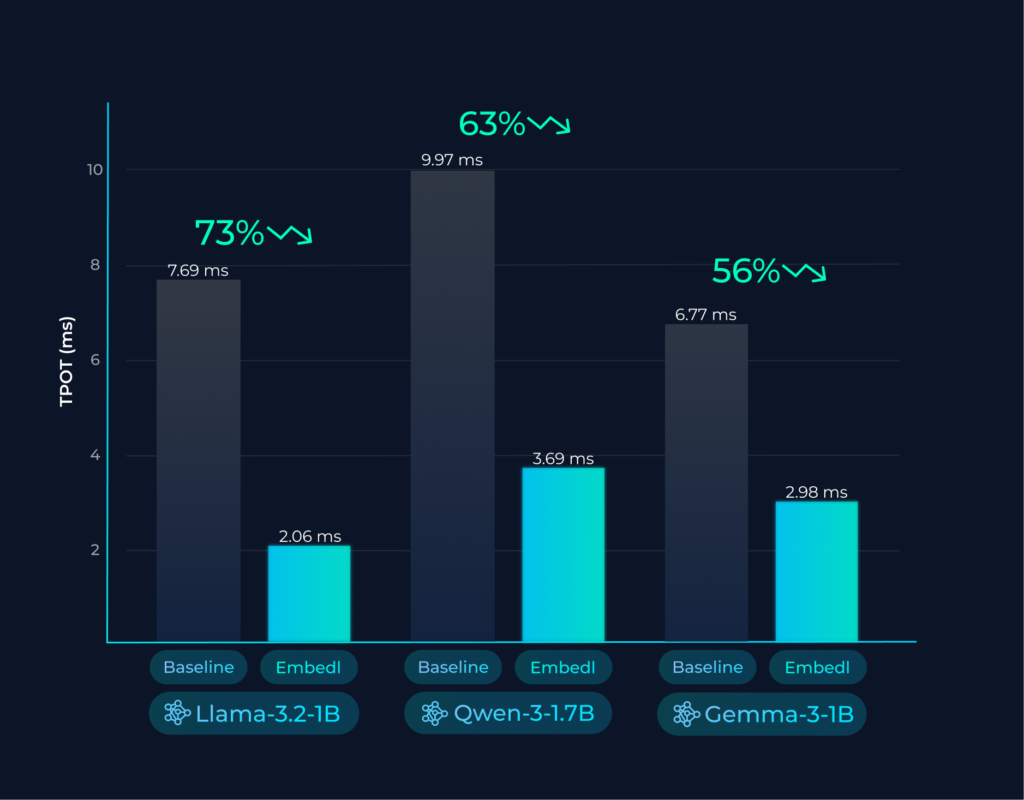
    • Llama-3.2-1B (Meta)  43% Latency Reduction
    • Gemma-3-270M (Google DeepMind)  26% Latency Reduction
    • Qwen-3-1.7B (Alibaba)  24% Latency Reduction

    These speedups are in relation to state-of-the-art optimization (w4A16 quantization). When combined with mixed precision optimization, the Embedl optimized Llama 3.2-1B for RTX 3500 Ada Generation reaches almost the same latency (2.06 ms) as the original model on the much more powerful H200 GPU (1.95 ms),, enabling true on-device AI.

    Available December 8 on Hugging Face

    Starting December 8, 2025, developers and researchers can access and use optimized FlashHead models for Llama-3.2, Gemma-3, and Qwen-3 on Hugging Face. Visit Hugging Face to try FlashHead and experience its efficiency improvements firsthand.

    “This milestone makes state-of-the-art models run faster, cheaper, and locally for everyone, no cloud required,” says Hans Salomonsson.

    About Embedl

    Embedl AB is a Swedish company specializing in AI optimization. Embedl delivers solutions to make AI models faster, smaller, and more energy-efficient, powering high-performance AI on any Edge device.

    Media Contact:

    Press Embedl AB

    frida@embedl.com |  www.embedl.com
  • Growing Organically: SEO Strategy for Enterprise Businesses in 2024

    In today’s connected digital economy, corporate firms that want to increase their online presence and reach various audiences across geographies must have a strong global SEO plan in place. Let’s look at how corporate organizations are expanding their SEO activities across regions to improve exposure and promote organic growth.

    With markets spanning multiple countries and languages, enterprise businesses face unique challenges in optimizing their online presence for global audiences. A cohesive global SEO strategy is essential to ensure consistent brand visibility, improve search engine rankings, and drive organic traffic across diverse regions.

    Scaling SEO Efforts

    One of the key aspects of scaling SEO strategy for enterprise businesses is conducting comprehensive keyword research tailored to each target market. This includes identifying pertinent keywords and search phrases across various languages and regions, while considering cultural subtleties and regional search patterns. By understanding the specific search behaviors of their target audiences, businesses can optimize their content to resonate effectively with local users and improve organic search visibility.

    Furthermore, implementing a localized content strategy is crucial for enterprise businesses looking to enhance their SEO performance across regions. This includes creating region-specific content that addresses the unique needs and preferences of local audiences. Whether it’s adapting website content, blog posts, or product descriptions, tailoring content to resonate with regional audiences can significantly impact search engine rankings and user engagement.

    Global SEO Strategy

    Another key component of a global SEO strategy for enterprise businesses is optimizing website architecture and technical SEO elements for international audiences. This involves implementing hreflang tags to indicate language and regional variations of content, optimizing meta tags and URLs for local search, and ensuring proper site structure and navigation for users across different regions. By addressing technical SEO considerations, businesses can improve website accessibility, user experience, and search engine visibility across global markets.

    In addition, implementing international SEO best practices such as geotargeting, local link creation, and multilingual SEO can improve the efficacy of company SEO operations across geographies. Businesses that take a holistic approach to global SEO may build a strong online presence, drive organic traffic, and grow their reach in a variety of regions throughout the world.

    Conclusion

    Businesses who want to extend their online presence across geographies and effectively target varied consumers must have a global SEO strategy. Businesses may increase organic search exposure and drive long-term success in global markets by undertaking extensive keyword research, developing a localized content strategy, improving technical SEO elements, and leveraging international SEO best practices.

  • Promoting Organic Growth: Strategies for Increasing Instagram Followers

    In the fast-paced world of social media marketing, promoting organic growth on platforms such as Instagram is still a key goal for brands looking to increase their reach and engagement. As competition heats up, it is critical to implement efficient ways for boosting Instagram Followers without turning to fake methods.

    Here Are Some Key Tactics to Nurture Organic Growth on to build Instagram Followers;

    1. Content Quality Over Quantity:

    In the quest for more followers, maintaining the quality of content should never be compromised. Posting visually appealing images, engaging videos, and compelling captions consistently can capture the attention of your target audience and encourage them to follow your account.

    2. Utilize Hashtags Strategically:

    Hashtags are a powerful tool for increasing discoverability on Instagram. Research relevant hashtags within your niche and incorporate them into your posts strategically. Using a mix of popular, niche-specific, and trending hashtags can help attract users who are interested in your content.

    3. Engage with Your Audience:

    Building meaningful relationships with your followers is essential for fostering loyalty and encouraging organic growth. Respond to comments, direct messages, and engage with user-generated content to show appreciation for your audience’s support. By actively participating in conversations and interactions, you can create a sense of community around your brand.

    4. Collaborate with Influencers and Partners:

    Partnering with influencers and like-minded brands can significantly boost your visibility and credibility on Instagram. Identify influencers whose audience aligns with your target demographic and collaborate on content or campaigns that resonate with both your followers and theirs. Authentic collaborations can introduce your brand to new audiences and attract genuine followers.

    5. Leverage Instagram Features:

    Stay updated on the latest features and tools offered by Instagram, such as Stories, Reels, IGTV, and Live. Experiment with different formats to diversify your content and keep your audience engaged. Leveraging these features not only enhances your visibility but also signals to the algorithm that you are an active and relevant user.

    6. Analyze and Optimize Performance:

    Regularly analyze your Instagram insights to understand what content resonates most with your audience. Identify trends, patterns, and demographics to tailor your content strategy accordingly. By optimizing your approach based on data-driven insights, you can continually improve your organic growth efforts.

    In an era when authenticity and true connections are more important than ever, developing organic growth on Instagram requires a combination of creativity, consistency, and genuine engagement. Brands can build a loyal following and succeed in the competitive world of social media marketing by focusing on quality content, strategic hashtag use, community participation, collaborations, and data-driven optimization.

  • Managing Lead Generation: Balancing Sales and Marketing

    Lead generation serves as the lifeblood of business growth, but its execution often sparks debate: does it belong to sales or marketing?

    Let’s look at how this process represents a joint effort between both teams and how important it is in generating business success.

    Traditionally, lead generation was predominantly associated with marketing teams. Their role involved attracting and capturing the interest of potential customers through diverse channels like social media, content department and email campaigns. client nurtures leads, guiding them through the sales funnel until they’re primed for conversion.

    Build relationships

    Conversely, sales teams take the baton from marketing to convert leads into customers. They engage in personalized communication, build relationships, and present sales pitches to seal the deal. This delineation between sales and marketing has evolved in the digital age.

    Successful Lead Generation

    In today’s landscape, successful lead generation hinges on the seamless integration of sales and marketing efforts. While client attracts prospects, sales provides insights into customer preferences and behavior, crucial for effective lead nurturing.

    Marketing Automation Platforms

    Technological advancements, notably CRM systems and marketing automation platforms, facilitate closer collaboration. These tools enable smooth lead transfer between departments and track interactions throughout the cycle, fostering synergy between sales and marketing.

    Furthermore, alignment of sales and marketing goals is imperative, along with clear communication and feedback loops. By working towards common objectives, both teams optimize lead generation efforts and drive better outcomes for the business.

    This collaboration ensures that leads are not just generated but also nurtured effectively, maximizing the likelihood of conversion. As the business landscape evolves, organizations prioritizing this synergy emerge as leaders in generating and converting leads, driving sustainable growth and success.

    Conclusion

    Lead generation is a collaborative effort that involves by accepting this symbiotic relationship, companies can optimize the potential of their lead generation efforts, paving the path for long-term growth and a competitive advantage in the dynamic marketplace.

  • Looking Ahead: Upcoming Trends in Social Media Marketing

    In the ever-evolving landscape of digital marketing, social media continues to play a pivotal role in shaping consumer behaviors and brand perceptions.

    As we step into the future, several emerging trends are poised to redefine the way businesses approach social media marketing.

    1. Video Dominance:

    Video content is projected to reign supreme in the realm of social media marketing. Short-form videos, live streams, and interactive content formats are gaining momentum, offering brands new avenues to engage with their audiences authentically. Platforms like TikTok and Instagram Reels are expected to witness exponential growth as marketers leverage the power of video storytelling to captivate viewers.

    2. Social Commerce:

    The integration of e-commerce functionalities directly into social media platforms is revolutionizing the shopping experience. With features like in-app purchasing and shoppable posts, brands can seamlessly guide consumers from discovery to purchase without leaving the platform. As social commerce continues to evolve, personalized recommendations and augmented reality (AR) technologies are anticipated to enhance the online shopping journey further.

    3. Influencer Marketing 2.0:

    While influencer marketing has been a staple for many brands, its landscape is evolving. Micro and nano-influencers are gaining traction due to their niche audiences and higher engagement rates. Additionally, the rise of virtual influencers and AI-generated avatars is redefining the concept of brand ambassadors. As authenticity becomes increasingly important, brands will need to prioritize genuine partnerships and transparent communication with influencers.

    4. Community Building:

    Building a sense of community around a brand is becoming integral to social media marketing strategies. Platforms are placing greater emphasis on fostering meaningful interactions and connections among users. Brands that invest in building engaged communities are likely to benefit from increased brand loyalty, advocacy, and long-term customer relationships.

    5. Social Listening and AI:

    Leveraging social listening tools and artificial intelligence (AI) technologies enables brands to gain valuable insights into consumer sentiments, preferences, and trends. By harnessing data analytics and machine learning algorithms, marketers can tailor their content strategies, refine targeting efforts, and deliver personalized experiences that resonate with their target audience.

    Keeping up with these new trends is essential for businesses to stay competitive as they traverse the ever-changing world of social media marketing. Brands in the digital age may create more meaningful connections with their audience and achieve measurable business outcomes by embracing innovation, cultivating real connections, and utilizing cutting-edge technologies.

  • Unlocking the Potential of Business Automation: Benefits and Avoidable Mistakes

    In today’s fast-paced business landscape, automation has emerged as a game-changer, offering organizations the opportunity to streamline operations, enhance efficiency, and drive growth. From automating repetitive tasks to optimizing workflows and improving decision-making processes, businesses are increasingly turning to automation to stay competitive in an increasingly digital world. However, while the benefits of business automation are undeniable, there are also potential pitfalls that organizations must navigate to ensure successful implementation.

    Key benefits

    One of the key benefits of business automation is increased productivity. By automating repetitive and time-consuming tasks, such as data entry, invoice processing, and report generation, employees can focus their time and energy on more strategic and value-added activities. This not only boosts productivity but also enhances employee satisfaction and morale, leading to a more engaged and motivated workforce.

    Additionally, business automation enables organizations to improve accuracy and reduce errors. Manual processes are prone to human error, which can lead to costly mistakes and inefficiencies. By automating critical tasks, businesses can minimize the risk of errors, ensure data integrity, and maintain high levels of accuracy across their operations. This, in turn, enhances the quality of products and services delivered to customers, resulting in increased customer satisfaction and loyalty.

    Automation Facilitates

    Furthermore, automation facilitates better decision-making by providing real-time insights and actionable data. By leveraging analytics and reporting tools, businesses can gain valuable insights into their performance, identify trends, and make informed decisions based on data-driven insights. This enables organizations to respond quickly to changing market conditions, identify opportunities for growth, and mitigate risks effectively.

    Benefits of Business Automation

    Despite the numerous benefits of business automation, there are also potential mistakes that organizations must avoid to ensure successful implementation. One common mistake is failing to adequately plan and strategize before implementing automation solutions. It’s essential for businesses to conduct a thorough analysis of their processes, identify areas where automation can add value, and develop a comprehensive implementation plan to ensure a smooth transition.

    Another mistake to avoid is overlooking the importance of employee training and buy-in. While automation can enhance productivity and efficiency, it’s crucial to involve employees in the process and provide them with the necessary training and support to adapt to the changes. Failure

    to engage employees and address their concerns can lead to resistance and hinder the success of automation initiatives.

    Additionally, businesses must be cautious not to over-automate processes unnecessarily. While automation can streamline operations, there are certain tasks that still require human intervention, such as creative problem-solving, critical thinking, and customer interaction. Over-automating processes can lead to a loss of personalization and human touch, potentially alienating customers and diminishing the overall customer experience.

    In conclusion,

    Business automation offers numerous benefits, including increased productivity, improved accuracy, and better decision-making. However, organizations must navigate potential pitfalls, such as inadequate planning, lack of employee buy-in, and over-automation, to ensure successful implementation. By carefully planning, strategizing, and engaging employees throughout the process, businesses can harness the power of automation to drive growth, innovation, and competitive advantage in today’s digital economy.

  • Qualities for Entrepreneurial Success in 2024

    In the ever-evolving landscape of entrepreneurship, success often hinges on the possession of certain essential qualities that set individuals apart and propel them toward their goals. As we navigate through the opportunities and challenges of 2024, entrepreneurs are recognizing the significance of honing these crucial traits to thrive in a dynamic and competitive business environment.

    One of the essential qualities for entrepreneurial success in 2024 is adaptability. With rapid advancements in technology, shifting market trends, and unpredictable global events, entrepreneurs must demonstrate the ability to adapt quickly to changing circumstances. Those who can pivot their strategies, embrace innovation, and remain agile in the face of uncertainty are better positioned to seize opportunities and overcome obstacles.

    Another critical attribute is resilience. The journey of entrepreneurship is often fraught with setbacks, failures, and unexpected hurdles. Entrepreneurs who possess resilience are not deterred by challenges but instead view them as learning opportunities and stepping stones to success. By maintaining a positive mindset, persevering through adversity, and bouncing back from setbacks, resilient entrepreneurs can weather the storms and emerge stronger than ever.

    Creativity is also indispensable for entrepreneurial success in 2024. In a world where innovation drives progress, entrepreneurs must think outside the box, challenge the status quo, and devise novel solutions to address emerging needs and opportunities. Creative thinkers are adept at identifying gaps in the market, conceptualizing disruptive ideas, and bringing them to fruition through ingenuity and imagination.

    Furthermore, effective communication skills are essential for entrepreneurs to succeed in 2024. Whether pitching ideas to investors, negotiating partnerships, or leading teams, the ability to articulate vision, influence stakeholders, and foster meaningful connections is invaluable. Entrepreneurs who excel in communication can build trust, inspire collaboration, and convey their message with clarity and conviction.

    Lastly, a growth mindset is fundamental for entrepreneurial success in 2024. Entrepreneurs who embrace continuous learning, seek feedback, and view challenges as opportunities for growth are better equipped to navigate the complexities of the business world. By fostering a mindset of curiosity, resilience, and adaptability, aspiring entrepreneurs can cultivate the skills and knowledge needed to succeed in an ever-changing landscape.

    In conclusion, the path to entrepreneurial success in 2024 is paved with essential qualities that empower individuals to navigate challenges, capitalise on opportunities, and drive innovation. By embracing adaptability, resilience, creativity, effective communication, and a growth mindset, entrepreneurs can position themselves for success in a dynamic and competitive business environment. As we embark on the journey ahead, these critical attributes will serve as guiding principles for aspiring entrepreneurs seeking to make their mark in the world of business.

  • Affordable Security Solutions for Your Company’s Needs

    In an era where cybersecurity threats are increasingly prevalent and sophisticated, ensuring the protection of sensitive data and digital assets has become paramount for businesses of all sizes. Recognizing the importance of robust security measures, companies are actively seeking affordable solutions that effectively safeguard their operations and assets. From startups to established enterprises, organizations are turning to cost-effective security solutions tailored to their specific needs.

    One such solution gaining traction in the business community is the implementation of affordable security measures that prioritize effectiveness without breaking the bank. These solutions encompass a range of strategies and technologies designed to mitigate risks and enhance resilience against cyber threats, physical breaches, and other security vulnerabilities.

    One notable aspect of affordable security solutions is their adaptability to the unique requirements of each company. Whether it’s a small business with limited resources or a large corporation with complex security needs, these solutions can be customized to fit the budget and scale of operations. By conducting thorough risk assessments and prioritizing critical assets, companies can identify the most cost-effective security measures to deploy.

    One cost-effective approach

    Security is the adoption of cloud-based security solutions. Cloud computing offers businesses access to robust security tools and services without the need for significant upfront investment in infrastructure or personnel. Cloud-based security solutions provide protection against malware, phishing attacks, data breaches, and other cyber threats while offering scalability and flexibility to accommodate changing business needs.

    Furthermore, many companies are leveraging open-source security tools and platforms as a cost-effective alternative to proprietary software solutions. Open-source security software, developed and maintained by a community of contributors, offers businesses access to advanced security features and functionalities at a fraction of the cost of commercial solutions. By harnessing the power of open-source technologies, companies can fortify their defenses against cyber threats without incurring prohibitive expenses.

    Training and Awareness Programs

    Additionally, affordable security solutions encompass employee training and awareness programs aimed at promoting a culture of security within the organization. Educating employees about cybersecurity best practices, data protection protocols, and the importance of maintaining vigilance against potential threats can significantly reduce the risk of security incidents stemming from human error or negligence.

    In conclusion,

    Affordable security solutions offer businesses a cost-effective means of fortifying their defenses against evolving cyber threats and security challenges. By prioritizing effectiveness, adaptability, and scalability, these solutions enable companies to safeguard their operations, protect sensitive data, and mitigate the risk of security breaches without exceeding budget constraints. As the threat landscape continues to evolve, investing in affordable security measures tailored to the specific needs of the organization remains essential for maintaining resilience and ensuring business continuity.

  • 5 Common Web Conversion Myths for New Business Owners

    In today’s digital age, establishing an online presence is essential for any new business looking to thrive in the competitive landscape. With the potential to reach a global audience, a well-designed website can serve as a powerful tool for driving conversions and generating revenue. However, amidst the plethora of advice and strategies available, new business owners must be wary of falling prey to common misconceptions that could hinder their web conversion efforts.

    Here are 5 misconceptions that new business owners should avoid:

    More Traffic Equals More Conversions:

    While attracting high volumes of traffic to your website is undoubtedly beneficial, it does not guarantee an increase in conversions. Quality over quantity is key, as targeted traffic consisting of genuinely interested individuals is more likely to convert into customers. Instead of solely focusing on increasing traffic, prioritize strategies that engage and resonate with your target audience to drive meaningful conversions.

    Aesthetic Design Trumps Functionality:

    While an aesthetically pleasing website can leave a positive impression on visitors, prioritising design over functionality can be detrimental to conversion rates. A visually appealing website must also offer intuitive navigation, fast load times, and easy access to essential information. Balancing aesthetics with functionality ensures a seamless user experience, ultimately leading to higher conversion rates.

    Conversion Rate Optimization is a One-Time Effort:

    Achieving optimal conversion rates requires ongoing effort and continuous optimization. Many new business owners make the mistake of assuming that once their website is launched, conversion optimization is complete. In reality, regularly analyzing data, testing different elements, and making iterative improvements are essential to keep up with evolving user preferences and market trends.

    Discounts and Promotions Always Drive Conversions:

    While discounts and promotions can be effective in incentivizing purchases, relying solely on price incentives to drive conversions may devalue your products or services in the eyes of consumers. Instead, focus on offering value through quality products, exceptional customer service, and unique selling propositions. Emphasizing the benefits and value proposition of your offerings can lead to more sustainable and profitable conversions in the long run.

    Ignoring Mobile Optimization:

    With the increasing prevalence of smartphones and tablets, mobile optimization is no longer optional—it’s imperative. Neglecting to optimise your website for mobile devices can result in a poor user experience, leading to high bounce rates and lost conversions. Ensure that your website is responsive, loads quickly on mobile devices, and provides a seamless browsing experience across all screen sizes.

    In conclusion, new business owners must navigate through the noise of misconceptions surrounding web conversion optimization to achieve success online. By prioritizing targeted traffic, balancing design with functionality, embracing continuous optimization, focusing on value proposition, and prioritizing mobile optimization, businesses can maximize their conversion rates and propel growth in the digital realm.

  • 4 Key Reasons Technology Is Vital For Business Success

    4 Key Reasons Technology Is Vital For Business Success

    In today’s rapidly evolving business landscape, technology plays an indispensable role in driving growth, efficiency, and innovation. From streamlining operations to enhancing customer experiences, businesses across industries rely on technology to stay competitive and thrive in a digital-first world.

    Here are 4 compelling reasons why technology is crucial for business success:

    Efficiency and Productivity:

    Technology enables businesses to automate repetitive tasks, streamline processes, and optimize workflows, leading to significant improvements in efficiency and productivity. With tools such as project management software, cloud computing, and collaboration platforms, employees can communicate seamlessly, access essential information from anywhere, and complete tasks more efficiently. By reducing manual work and eliminating bottlenecks, technology empowers businesses to accomplish more in less time, thereby driving growth and profitability.

    Improved Decision-Making:

    In today’s data-driven era, businesses have access to vast amounts of information that can be leveraged to make informed decisions. Advanced analytics tools enable companies to gather, analyze, and interpret data from various sources, providing valuable insights into customer behavior, market trends, and business performance. By harnessing the power of data analytics, businesses can make strategic decisions based on facts and trends rather than intuition, resulting in better outcomes and a competitive edge in the market.

    Enhanced Customer Experiences:

    Technology has revolutionized the way businesses interact with customers, enabling personalized, seamless, and convenient experiences across various touchpoints. From AI-powered chatbots and virtual assistants to e-commerce platforms and mobile apps, technology facilitates round-the-clock access to products and services, enabling businesses to meet the evolving needs and preferences of their customers. By delivering exceptional customer experiences, businesses can build loyalty, drive repeat business, and gain a competitive advantage in the market.

    Innovation and Adaptability:

    Technology fuels innovation by enabling businesses to experiment with new ideas, develop novel solutions, and adapt to changing market conditions. With tools such as rapid prototyping, 3D printing, and virtual reality, businesses can bring concepts to life faster and more cost-effectively than ever before. Additionally, cloud computing and software-as-a-service (SaaS) platforms empower businesses to scale rapidly, experiment with new business models, and stay ahead of the competition in an increasingly dynamic and disruptive business environment.

    In conclusion,

    Technology is essential for business success in the digital age, enabling enhanced efficiency, improved decision-making, superior customer experiences, and innovation. By embracing technology and leveraging it effectively, businesses can unlock new opportunities, drive growth, and maintain a competitive edge in today’s fast-paced and interconnected world. As technology continues to evolve, businesses must remain agile, adaptable, and forward-thinking to harness its full potential and thrive in an ever-changing business landscape.